The Ring Doorbell Changed the Doorstep Forever
The Ring Doorbell Changed the Doorstep Forever
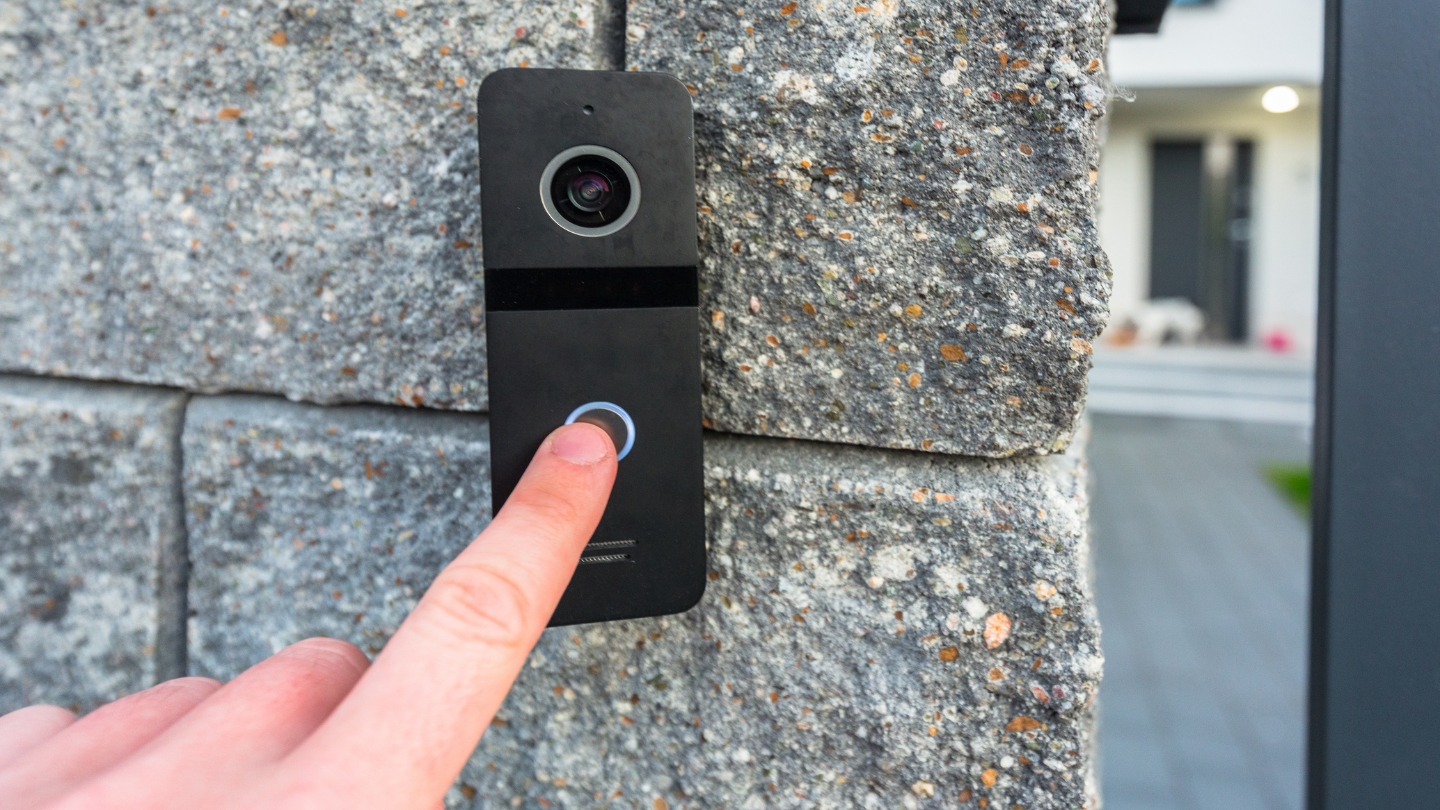
A process server knocks on a door in Leeds. Nobody comes, but somebody answers. The voice crackling through the doorbell speaker belongs to the occupier, who is watching the doorstep from a phone screen two hundred miles away, deciding in real time whether this visitor is worth engaging with. Ten years ago this encounter was science fiction. Today it is a routine Tuesday, and it has quietly rewritten the oldest transaction in civil justice: the moment legal documents change hands at a front door.
The change cuts in two directions at once, and that is the part almost nobody has thought through. The video doorbell has made the doorstep both a fortress and a witness. It gives occupiers unprecedented power to screen, stall and avoid the people who call on them. And it simultaneously creates an independent, timestamped record of exactly who attended, when, and what happened. For anyone whose work depends on the doorstep, both halves matter.
One door in five now watches back
The scale of the shift is easy to underestimate. Around one in five British households now has a video doorbell, with ownership highest among younger householders and the devices increasingly fitted as standard on new-build developments. Falling prices have turned what was a luxury gadget into an impulse purchase, and the surge in doorstep deliveries has given every household a daily reason to want eyes on the porch.
The behavioural change matters more than the hardware. The doorbell’s defining feature is that it separates answering from opening. An occupier can see a caller, speak to them, ignore them or study them later, all without the door moving an inch. The unannounced knock, once guaranteed a human response or an honest absence, now meets a filter.
Harder to reach, and harder to deny
For process serving, that filter has real consequences. A respondent who wants to avoid service can now watch every attempt from the sofa, or from another country, and simply decline to engage. The recorded history of a server’s visits sits in an app, and a determined evader learns the pattern of attendances faster than ever.
But the fortress is also a witness, and the witness does not choose sides. The same camera that lets an occupier dodge the doorbell records the server standing there: the date, the time, the documents in hand, the words spoken through the intercom. English law has long held that service cannot be defeated by simple refusal; under CPR Part 6, personal service involves leaving the document with the individual, and as we have examined before, refusing to take documents does not make valid service disappear. What the doorbell changes is the evidential landscape around disputes. The classic “I was never served” argument now has to survive the occupier’s own footage, which either corroborates the server’s sworn statement or was mysteriously never kept. A recording that shows a server attending, announcing the nature of the documents and leaving them appropriately is difficult evidence to argue with, whichever device captured it.
The professional response is to match the technology’s standard of proof. Contemporaneous notes, precise timings, descriptions of the address and of anyone spoken to have always been the backbone of a certificate of service. In a world where the doorstep may hold its own recording, that documentation is no longer just good practice. It is what keeps the server’s account and the electronic record telling the same story.
The doorbell is not legally neutral
It is tempting to treat all this footage as free evidence, but the courts and the regulator have made clear the devices sit inside a legal framework of their own. In Fairhurst v Woodard, Oxford County Court found that a householder’s network of cameras, including a Ring doorbell whose microphone captured conversations more than sixty feet away, breached data protection law and amounted to harassment of a neighbour. The ICO’s guidance on home CCTV draws the boundary plainly: film only your own property and data protection law does not apply, but capture the street, a shared space or a neighbour’s home and you become a data controller, with duties over retention, disclosure and other people’s rights in your recordings. A doorbell pointed at a communal walkway is not a private toy. It is processing the personal data of everyone who passes, process servers included.
When the doorbell joined a network
The larger question is what these millions of cameras are becoming collectively, and this year provided a revealing answer. In February, Ring abandoned a planned partnership with Flock Safety, a company operating camera and licence plate reader networks used primarily by American police forces. The deal would have allowed agencies working with Flock to request video from Ring devices, where customers permitted it. It collapsed days after a Super Bowl advert for a Ring feature called Search Party, which showed a neighbourhood pooling its cameras to find a lost dog, was widely condemned as dystopian surveillance. Ring stated the integration never launched and no customer videos were shared; both companies called the cancellation mutual.
The episode matters because it marks the boundary the public is drawing. Householders bought a doorbell; they did not knowingly enrol their front door in a searchable surveillance network, and the backlash showed how sharply people react when that line blurs. The doorstep has become contested ground between security, privacy and evidence, and the rules governing it are still being written in courtrooms, regulators’ offices and, occasionally, Super Bowl adverts.
The doorstep still decides cases
None of this diminishes the doorstep’s legal importance. It heightens it. Service of process was built on a person, a place and a sworn account, and the camera has now added a fourth participant that remembers everything. For the evasive respondent, that is bad news dressed as convenience. For the professional whose attendances are diligent, transparent and properly documented, it is quiet vindication: the record on the wall and the record in the server’s evidence should say exactly the same thing.
If you need documents served on someone who is hard to reach, or evidence of service that will withstand challenge, Tremark Associates can help. Call our team on 0113 263 6466 or use the form below to discuss how we can support your case.
Frequently Asked Questions
Can someone avoid being served by ignoring their video doorbell?
Not indefinitely. Ignoring callers may frustrate individual attempts, but a professional server documents every attendance, and that record supports an application for service by an alternative method where a respondent is evading service. Courts have consistently held that deliberately avoiding service does not allow someone to escape proceedings.
Can doorbell footage be used in disputes about whether documents were served?
Yes. Civil courts regularly receive video evidence, and doorbell footage showing a server’s attendance can corroborate a certificate of service or undermine a claim that no visit took place. Its weight depends on provenance and completeness, and selective or missing footage tends to attract judicial scepticism.
Do video doorbell owners have legal responsibilities?
They can do. ICO guidance confirms that where a doorbell or camera captures beyond the boundary of the owner’s property, such as the street or a neighbour’s home, data protection law applies, bringing duties around fairness, retention and other people’s rights. In Fairhurst v Woodard, a householder’s cameras were found to breach data protection law and amount to harassment.
How do professional process servers prove attendance in the doorbell era?
Through the same discipline that has always underpinned good service, applied more rigorously: precise contemporaneous records of each visit, including dates, times, observations and any interaction, supported by a sworn statement or certificate of service. That documentation stands on its own and aligns with any electronic record the property itself may hold.
Categories
- Process Serving
Popular Blogs