The Candidate on the Video Call May Not Be the One Who Starts
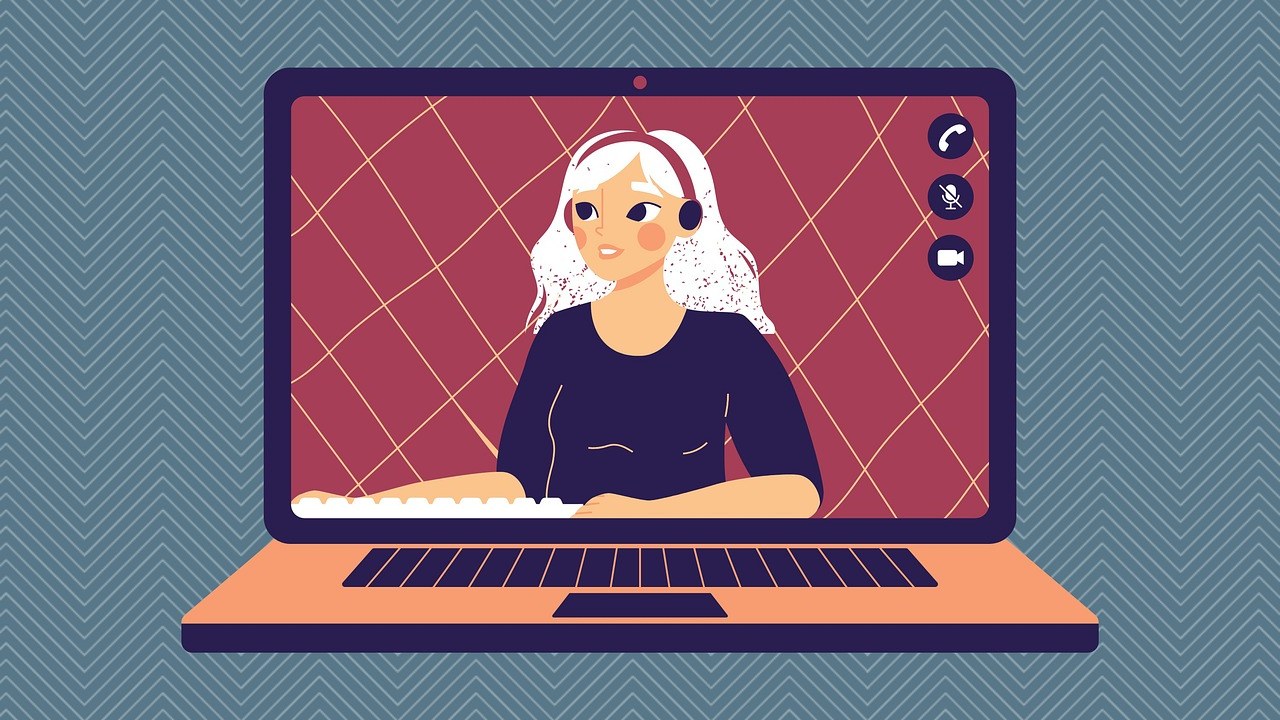
You interviewed her twice on video, and she handled every question with ease. Her references came back clean, her documents passed and video interview fraud never crossed anyone’s mind. Last week your office manager boxed up a laptop and posted it to the address on her form. She starts on Monday, logging in from home. Nobody at your firm has stood in a room with her, shaken her hand or seen her face anywhere except on a screen. If someone else sat that interview, which part of your process would have caught it?
For many employers this is now a normal way to hire, and it feels safe because each step was done properly. Yet a video call shows only that a face appeared on a screen one afternoon. A document check shows that the papers are genuine, and a reference shows that someone of that name has a past. None of these steps ties the person who starts work to the person who was interviewed.
Remote hiring drops the step that matched face to passport
Office hiring used to end with a meeting, even a brief one, at which someone held a passport up against the face in front of them. Remote hiring drops that moment without anyone choosing to drop it. The interview happens on a screen and the documents arrive as uploads, so the employer builds a picture of the candidate from separate pieces. Candidate fraud lives in the gap between them, because nothing in the file proves that one person supplied all of it.

Some candidates already use the gap. In a Gartner survey of 3,000 job candidates, 6% admitted taking part in interview fraud. They did so either by posing as someone else or by having someone pose as them. Gartner also forecasts that by 2028 one in four candidate profiles worldwide could be fake. A hiring manager watching a strong video interview has no way to tell which group the person on screen belongs to.
Candidate fraud is built to pass the checks
The best documented schemes treat HR checks as an obstacle to plan around. In the assessment of the Office of Financial Sanctions Implementation (OFSI), it is “almost certain” that UK firms are being targeted by North Korean IT workers posing as freelancers. OFSI is the Treasury body that enforces financial sanctions, so the warning carries official weight. It rates it highly likely that these workers hide behind aliases, false identities and proxies.
The equipment gets the same planning. A Google intelligence report, as Computing reported in 2025, found UK-based helpers who receive company laptops, set up addresses and help secure fake passports. That support lets the fraudsters pass initial HR checks undetected. OFSI also thinks it likely that the workers use software that lets someone control a computer from elsewhere, which hides where they really are.
The order of the checks therefore matters. A passport scan, an address and a clean reference all come before or around the call. Those are the checks this support network exists to beat. Remote hiring often has no moment at onboarding or on the first day when a real person must appear and prove they match the file.
Seeing a face is no longer proof of identity
The obvious fix is to insist on a live video call, and it does help. The experts quoted in the Computing report urged UK firms to reintroduce video or in-person interviews for remote hiring. A call screens out the crudest attempts. However, the same report notes that deepfakes make seeing a person less of a confirmation of identity than it used to be. Deepfakes are video that software has altered to show someone else’s face.
The right to work rules in England and Wales still lean on that channel. From 1 October 2026, the regime expands and places more weight on identity matching and on stopping imposters. Even so, for manual and online checks an employer may still compare the person by live video call. Where an employer uses a registered digital verification service, it remains responsible for satisfying itself that the photograph and details are consistent with the individual presenting for work.
Fraud falls where firms check, so check on day one
A sceptical HR director would call this alarm built on thin numbers. The 6% comes from a survey, the one-in-four figure is a forecast, and there is no official UK count of interview impersonation. Employers already run right to work and reference checks. Fraud also falls where controls improve. False document filings for personal current accounts fell 41% in Cifas figures, a drop its members linked to better controls and more investment in detection tools.
The same figures show tenant referencing filings up 263%, driven by false and altered documents, so forged paperwork still succeeds where checks are thinner. The limit on the hiring numbers is real, and an employer should watch its own records for signs of video interview fraud before assuming the worst.
What interview impersonation could cost your firm
The cost of the wrong person starting goes well beyond a poor hire. If that person is a North Korean worker, employing or paying them could breach financial sanctions without the employer knowing. That exposes the business to civil penalties or even criminal charges. Candidate fraud also brings cybersecurity risks that can be far more serious than a bad hire, as a Gartner analyst has warned. A starter with a company laptop and logins may reach client files and payment systems from the first morning.
The right to work rules add a second exposure. Under section 15 of the Immigration, Asylum and Nationality Act 2006, an employer has a defence against a civil penalty, called a statutory excuse. It has that defence only if it makes the prescribed checks, in the prescribed way, before employment starts. An employer who never met the starter may be unable to show that it checked the person who actually started.
So the work belongs after the call as well as before it. Meet the starter in person, or use a registered digital verification service, and complete the right to work checks before employment starts. Then check that the person matches both the documents and the interview. Pre-employment checks that tie the starter to their documents and past take some time at the start. They close the gap that video interview fraud relies on, so build them into every remote hire.
If you hire staff you never meet in person and need to know that the person who starts is the person you interviewed, Tremark Associates can help. Call our team on 0113 263 6466 or use the form below to discuss pre-employment checks for your next remote hire.
Frequently Asked Questions
How can an employer be sure the person interviewed by video is the person they hired?
Meet them in person before they start, or verify them through a registered digital verification service at onboarding, and keep the right to work checks ahead of the start date. Keep a note of who ran each interview, so that the same person can confirm the starter is the candidate they saw. That simple link between interviewer and starter is a practical guard against video interview fraud.
Is video interview fraud a real risk for UK employers?
Yes. One operative was found running at least 12 fake identities across Europe and North America. Identity fraud also made up 54% of the cases filed to the main UK fraud database in 2025.
Categories
- Pre-Employment Checks
Popular Blogs